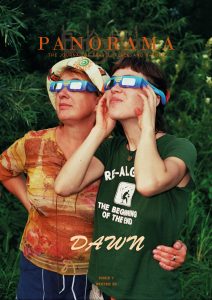
When Weather Still Remained a Background
I have been walking this street the major part of my life. It is not remarkable, as places gain prominence by postcards or accolades. Its length is not interrupted by a monument. No restaurant overflows the chairs on the sidewalk. It is an avenue meant to be walked through, not to be arrived at; it is a connecting tissue of other more noticeable places. But it has captured me as long as I have ever travelled purposefully.
The street had not wanted to be noticed during many years. It just gave itself the right to get used. I walked over it on my way to school, and then to work, and then for no purpose but because I do it. It got footsteps with no comment and shadows without opposition. The street was not a person; it was infrastructure.
Weather was then considerately kept to the periphery. It was a hot summer, but a summer that was mindful of time. Mornings came cool enough to be of the body. Night softened the sides of the day. Rain followed expectation. There was a regular change in seasons that was reassuring. The street threw these shifts off.
It is only looking back now that I realize how accurately my body had been conditioned by this predictability. I sensed, unconsciously, when it was alright to walk. I had confidence in the pavement, that it would not burn; in the air, that it would not get thick; and in the shade, that it would do its job. Walking was not a choice; it was the breathing process expanded.
The initial modifications did not make themselves pronounced. I cannot single out any one day and call it the beginning. Rather, there were little disruptions: a morning seemed too heavy, a night would not cool down, and a patch of shade did not give any relief. These were incidental moments initially, which were easily relegated to anomalies.
However, when occurring with regularity, anomalies become patterns.
I started observing that I was adapting automatically. Leaving earlier. Shortening routes. Passing over the road more frequently in pursuit of shade. These were not decisions I posed in terms of climate change; they were negotiations of the body, and they were instituted, preceding the entry of language.
The street itself did not appear any worse. The same houses stood. The pavement was lined with the same trees. However, they no longer acted in the same way. Walls were heat absorbing. Metal gates were hot to the handle. The tarmac became loose, and its surface seemed a bit shaky in the sole. Something new was being taught on the street, and it was learning it more rapidly than I was.
Walking grew effortful. Distance collapsed. Where once it was a leisurely circle, it now turned into a trial. I started experiencing my own vulnerability more visibly, not the melodramatic vulnerability of danger, but the silent vulnerability of boundaries. The street, which has so far been a home to me, was now to try me.
This was not my most disturbing experience troubling me, but its lopsided nature was. There is greater shade on one side of the street as compared to the other. The houses containing trees provided an escape that was not provided elsewhere. A parked car had the potential to form a temporary group of shade. Climate change manifested itself not here in the form of abstraction, but of spatial ethics: who was advantaged, who suffered, and who evolved.
I had imagined the street to be neutral. I was wrong. It was a record book of choices made many years before I came: where the trees were planted, what materials were employed, and what comfort had been made the foremost. The weather was now reading that off.
During that time when I started noticing, I was still under the impression that the street would eventually recover itself. That the heat would retreat. Such a balance would also come back. Reflection at that point, however, was still a comparison with the past. I moved with memory as my point of reference.
I had not yet realized that the street was not being mirrored for what it had been—but for what it was becoming.
How to Negotiate a Changing Place
At some stage, the process of adaptation ceases to be temporary and starts to be structural. I did not pass that threshold with any ceremony. One day I noticed that I used to ask whether it was a good time to walk or not. I inquired as to whether it was possible.
Walking slowed me down. I was initially opposed to this slowness. It was as though a capitulation, a curtailing of power. Later, it felt like alignment. The road wanted me to move slowly, and my body had to obey its commands.
The slowness increased the focus. I started observing the reaction of other living creatures to the heat. Birds changed their time; they were silent when they had been so vociferous. Stray animals followed the paths with beautiful efficiency, following the walls, which lost less of their warmth. Plants shunned reflective surfaces, and their growth patterns were slightly changed.
The street inhabitants, human and otherwise, were not responding; they were bargaining. Their negotiation time was longer than mine.
It was this discovery that added an ethical aspect to my walking. Not morality as an argument, but morality as a pose. To have a walking presence was to recognize mutual vulnerability. The climate crisis, which is so frequently talked about in statistics and predictions, appeared here as a daily, interpersonal state of things.
Water became newly visible. A running hose was too long to pass unnoticed. There were buckets below leaking faucets. When rain came, it was taken not with rejoicing but with moderation, as though thanksgiving had learned to economize. The street was now aware of its thirst.
Neighbors adapted quietly. The elders were men who stayed longer indoors. Later in the evening children played. Discussions on weather changed from complaints to worries, no longer about this summer but about these summers, in the plural, and adding up. Language is modified together with behavior.
I had a lot of thoughts about traveling when I was doing these walks. Traditional travel writing is guaranteed to transform, to change, and to change by elsewhere, by distance, novelty, and rupture. My situation on the street was the opposite of the case. Change was brought about by repetition. The same path, passed under other circumstances, yielded another perception every time.
I was not finding a new location. It was a new introduction of an old one to different conditions.
This disturbed my sense of identity. Is place something that can be unstable? Comfort was not due to me in the street. It was there to be unreadable. I started to feel a suspicion about belonging, which seemed to be like living with a problem instead of running away.
The climate crisis is commonly perceived as a loss in the future. Altered presence came as a loss on my street. There were trees remaining, but they were giving less. There were still nights, and they gave little relief. The world was not gone; it had changed its terms of participation.
Strolling was a witnessing process. Every step admitted continuity in distress. Every turn was a continuity instead of a solution. Some days, I did not walk at all. These were absenteeisms of the story also—indications of the boundaries past which adaptation could not be pushed.
I suddenly knew that reflection was no longer the case of looking back. It concerned how to stay.
Staying With the Street
At the end of the street is a corner in which the pavement turns in a little. I do not know how many years I stood there. I am waiting now because my body tells me so. Reflection comes not as an insight, but as a need.
At this point walking was no longer casual. It was now conscious, nearly ritualized. I carried water. I chose times carefully. I was able to know which surfaces held heat the longest and which dissipated it faster. This was less the knowledge of mastery and more of the humility.
The street did not wait any longer to be noticed by me. It insisted.
What is ethical traveling in a warming world? It seemed as though there was a refusal to flee on my street. It resembled attention that is not extracted. It was as though it accepted implication as opposed to being distant.
The street involved me by merely letting me hang around. I took advantage of the shades that had been planted. I was exposed to heat caused by systems way over my head. It was no longer an abstract responsibility but a responsibility that was entrenched in proximity.
I started to see reflection as a process rather than an isolated event, but as a relationship. The street brought it back to me and made it all the more meager with heat. I mirrored its injuries in my changed practices. We met in adaptation.
This was not a corresponding exchange. The street had more than I had. But it enticed me to mindfulness. It made me understand that ethics does not necessarily declare itself as a choice. At times it comes in the form of constraint.
I still walk the street. I am not sure what it will teach next. I do not know, except that the weather is not going to be the same, and neither am I. Travel—it is not all the time that one has to go. Change at times takes long to be changed.
The street is no more familiar with me. Or maybe it is more acquainted with me now that the assumption is gone and it is adjusted to truth. We have gone on together, not to resolution, but to endurance.